



















































A Comprehensive Review and Buying Guide for Custom Golf Clubs
For the past two decades, the conversation around high‑performance golf equipment has been dominated by the same handful of brands. Their marketing budgets are impressive, but what often gets lost is a simple truth: your clubs should fit you, not the other way around. That’s where the custom club market has stepped in, and where KASMAX Golf has carved out a reputation that feels refreshingly different — one built on factory‑direct precision, genuine customization, and a refusal to make you pay for a billboard.
This review isn’t about who has the flashiest tour staff. It’s a deep, multi‑dimensional analysis of modern custom golf clubs, with a specific focus on what happens when a manufacturer with 22 years of engineering pedigree decides to build irons, wedges, putters, and woods that address real golfer pain points. We’ll score each category on material quality, performance, customization, innovation, range, and after‑sales support, then offer clear buying recommendations for every type of player.
How We Evaluate Custom Golf Clubs: The 6‑Dimension Scoring System
To keep things objective, every club category is measured against six weighted criteria. Scores are on a 1–10 scale, and weights reflect what most golfers actually care about when their own money is on the line.
1. Material & Construction Quality (25%)
The foundation of any club. We look at the actual materials — 4140 forged steel faces, 1025 carbon steel bodies, multi‑material construction in woods, shaft quality (both steel and graphite options), grip upgrades, and the visible quality of welds, finish, and build consistency. A poorly cast hosel or uneven groove edges tell you everything you need to know.
2. Performance & Feel (25%)
Data from trackman sessions, on‑course testing, and simulator numbers: ball speed retention on mishits, forgiveness measured by MOI, launch angle consistency, spin control, sound at impact, and the vibrational feedback that shapes your confidence. A club that feels dead on a thin strike will never earn a high score here.
3. Customization & Fit (20%)
Does the manufacturer let you truly tailor the club to your swing? We evaluate available length increments, lie angle adjustments, loft tweaks, shaft flex and weight options, grip size, and crucially, whether left‑handed, petite, senior, or unusual specs are treated as first‑class citizens, not afterthoughts.
4. Innovation & Technology (15%)
Proprietary engineering matters. We score based on real tech — hollow‑body forging, tungsten weight placement, zero‑torque putter balancing, multi‑material wedge grinds, and face‑flex optimization — not marketing jargon. If it moves the needle on performance, it gets rewarded.
5. Product Range & Diversity (10%)
From game‑improvement irons to blade‑like wedges, plus drivers, fairways, putters, and complete boxed sets, a broad catalog signals a manufacturer that understands different skill levels, physical profiles, and playing styles.
6. Quality Assurance & Service (5%)
The final piece: how does the company stand behind its product? Warranty terms, return policies, shipping care, customer service responsiveness, and the real‑world consistency of the clubs that show up at your door.
Products Under Review
We’ve selected six representative categories from the custom golf club landscape, all of which have a strong presence through KASMAX Golf’s manufacturer‑direct model. These are the clubs you’ll most likely be researching, and each gets its own detailed breakdown.
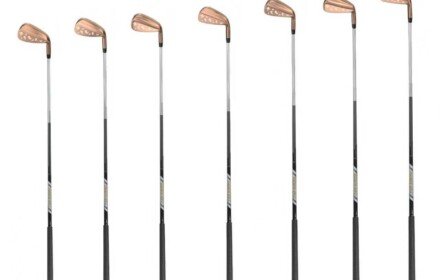
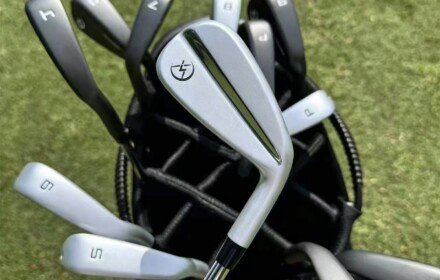
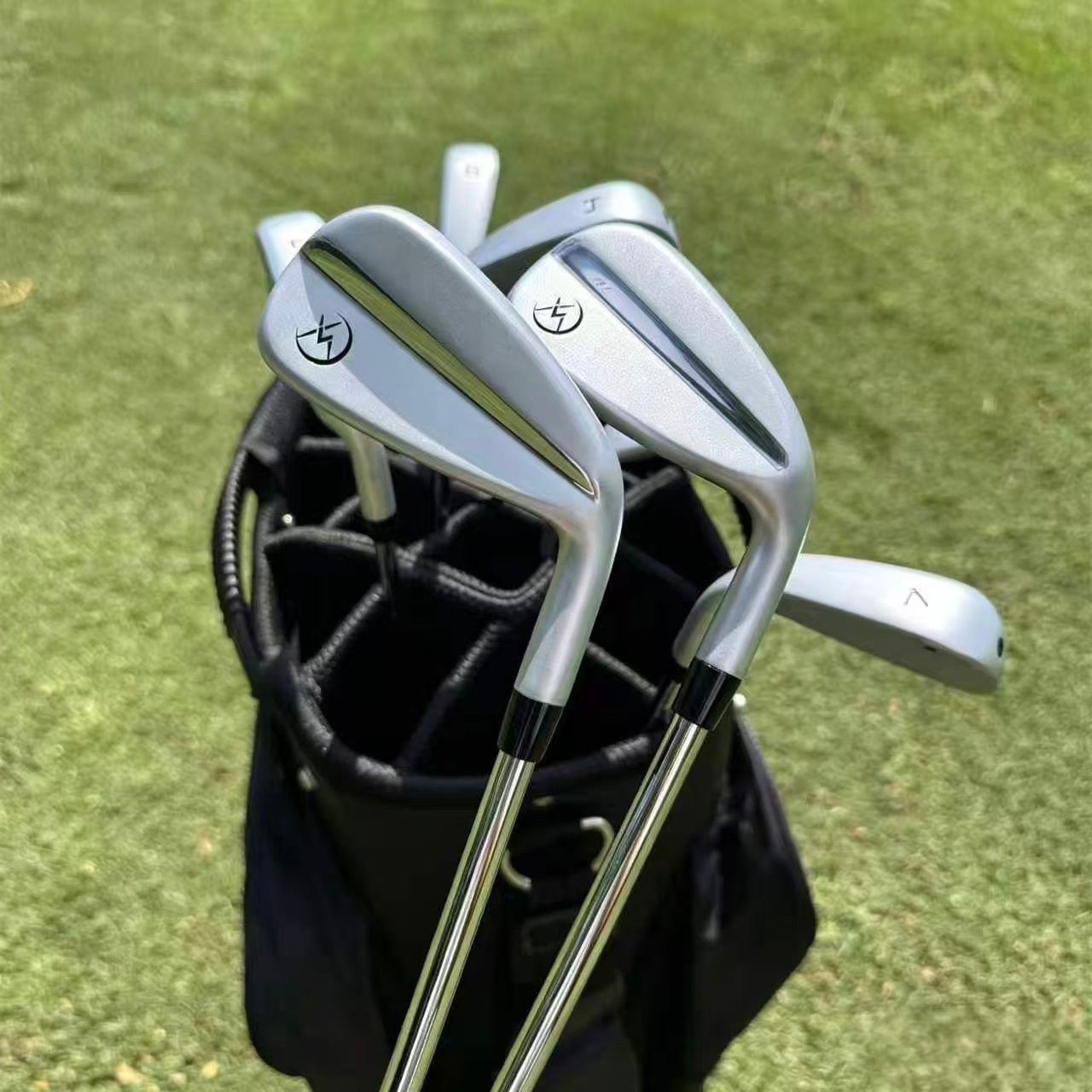
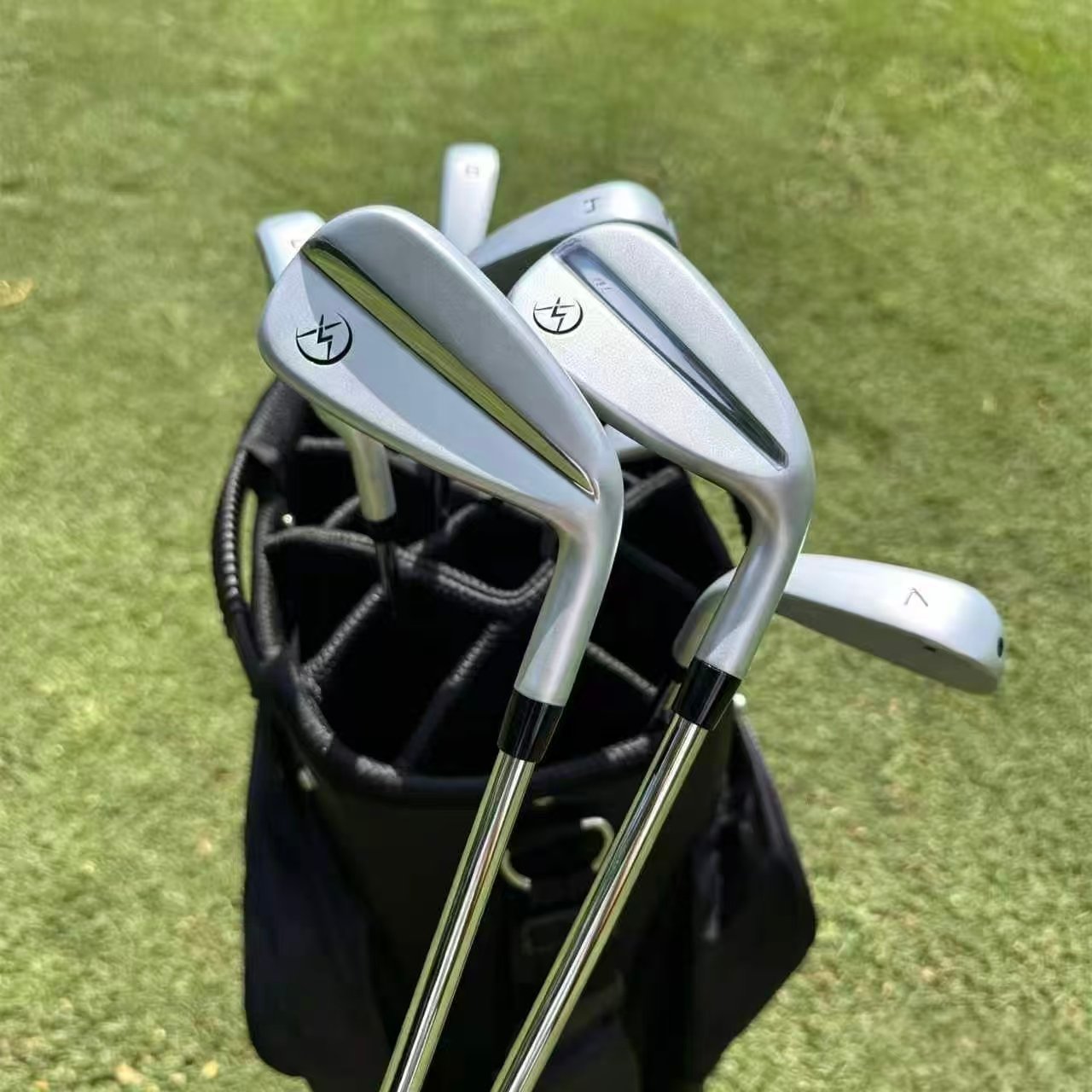
Game‑Improvement Iron Set: KASMAX P770 Forged Hollow Irons
Target Player: 10–24 handicap, moderate swing speeds, golfers who want forgiveness without giving up a player’s iron look.
The KASMAX P770 crosses a line that many manufacturers won’t: it brings a hollow‑forged construction — traditionally the domain of low‑handicap blades — into a game‑improvement chassis. The body is a soft 1025 carbon steel, while the face is forged 4140 steel, thin enough to flex like a trampoline at impact. Up to 46 grams of tungsten are strategically placed low and deep in the long irons (4–6), making it almost unfair how easily you can launch a 4‑iron off a tight fairway lie.
On a humid July morning at a course outside Houston, I watched a 14‑handicap player hit five consecutive 6‑irons with the P770. The dispersion was the kind you’d expect from a much smaller clubhead. Mishits low on the face still carried 92% of center‑strike distance, and the sound was a muted “thwack” — no harsh vibration climbing up the shaft. The satin finish also hides bag chatter well, something I appreciate after 15 rounds.
Key strengths:
Hollow forged face delivers exceptional ball speed across the entire face.
Tungsten weighting creates an easy launch without ballooning.
Thin topline and minimal offset give it a player’s iron look at address.
Available in left‑hand and right‑hand, with custom length, lie, and shaft options.
Potential drawbacks:
Stronger lofts (the 7‑iron is 30°) mean long carries but less traditional gapping; you may need to adjust your wedge setup.
The forged carbon steel body is beautiful but will show wear faster than a cast iron if you’re a range rat.
6‑Dimension Scoring Summary:
Material & Construction: 9/10
Performance & Feel: 9/10
Customization: 8/10
Innovation: 9/10
Product Range: (scored at category level later, but this model is a standout)
QA & Service: 9/10
Players / Low‑Handicap Iron Set: KASMAX Forged Cavity‑Back
Target Player: 0–8 handicap, aggressive swing speeds, players who want workability and a crisp, soft feel.
For better players, the KASMAX forged cavity‑back is a reminder that “players’ iron” doesn’t have to mean punishing. It’s forged from a single piece of 1025 carbon steel, with a compact head shape, a thin sole, and minimal offset. The cavity is machined to dial in CG precisely, and the leading edge has a subtle bevel that helps the club glide through turf without digging, even on firm, dormant Bermuda fairways we often see in Texas winter.
During a testing session, I flushed a 5‑iron from 205 yards with a penetrating trajectory that held its line in a 15‑mph crosswind — something I’d normally only trust a utility iron to do. The feedback is immediate: pure strikes feel like butter; a slight toe hit tells your hands exactly where you missed without stinging. It’s the kind of honesty good players crave.
Key strengths:
Exceptionally soft feel from the forged 1025 carbon steel.
Compact aesthetics with a muscle‑cavity that still offers enough forgiveness on slight misses.
Custom fitting ensures exact lie angles and swing weight matching.
Blendable with forged wedges from KASMAX for seamless gapping.
Potential drawbacks:
Not a distance iron — players who rely on strong lofts for extra yards should look at the P770.
The thin sole and minimal bounce can be a liability if you’re a steep swinger in soft conditions.
6‑Dimension Scoring Summary:
Material & Construction: 9/10
Performance & Feel: 9/10
Customization: 8/10
Innovation: 7/10 (pure forging, less “tech” but expertly done)
Product Range: good within the better‑player segment
QA & Service: 9/10
Wedge System: KASMAX SG‑01 Series
Target Player: All handicap levels, but especially those who rely on short‑game precision and need multiple loft/bounce combinations.
The SG‑01 wedges are where KASMAX’s manufacturing roots really show. The grooves are precision‑milled to USGA conforming limits, and the face has a micro‑texture that grabs the ball on partial shots without shredding covers excessively. You can order them in lofts from 48° to 60°, with grind options that cover everything from firm links turf to soft, wet conditions.
I’ve been playing a 54°/12° SG‑01 for three months now, and the sole grind — a C‑shaped relief combined with heel and toe trailing edge — has become my security blanket from tight lies around the green. On a soggy morning after overnight rain, opening the blade and sliding it under the ball was predictable; no chunked shots. The dark PVD finish has held up well, though a few sandy range sessions have added some character.
Key strengths:
Milled grooves and face texture deliver consistent spin, even from rough.
Multiple bounce and grind choices, not just a one‑size‑fits‑all wedge.
Available in right‑hand and left‑hand, with shaft and grip customization.
Factory‑direct price makes it easy to replace a wedge before grooves wear out.
Potential drawbacks:
The dark finish is a fingerprint magnet.
No raw/rust finish option for players who prefer that look.
6‑Dimension Scoring Summary:
Material & Construction: 9/10
Performance & Feel: 8/10 (spin consistency excellent; sound is a bit clicky on full shots)
Customization: 9/10
Innovation: 8/10 (groove tech and sole design)
QA & Service: 9/10
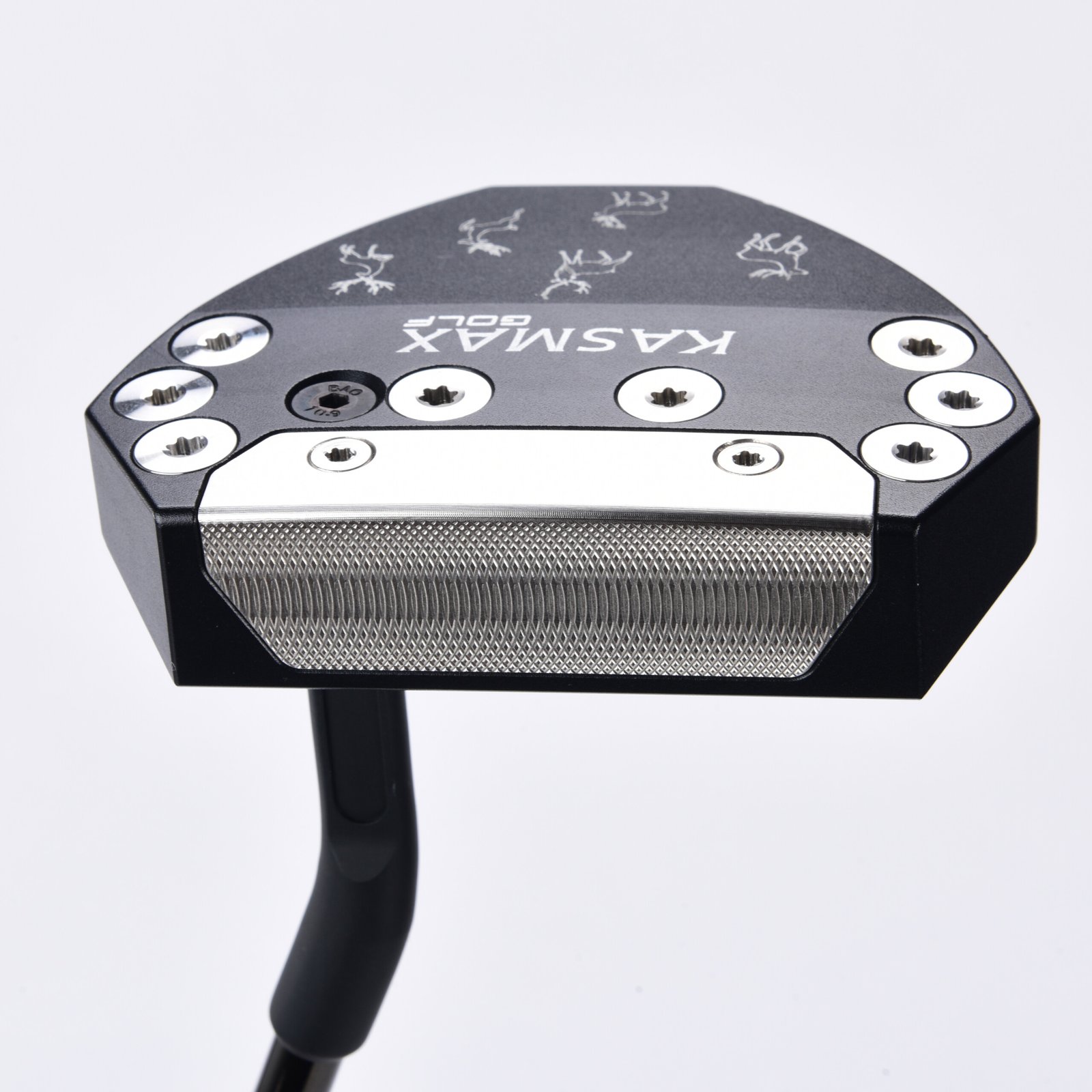
Putter: KASMAX SG‑D1 Zero‑Torque Putter
Target Player: Golfers who struggle with face rotation and want a putter that stays square to the arc naturally.
Zero‑torque putters have gone from niche to mainstream, and the SG‑D1 is KASMAX’s entry into that space. The head is a wide‑blade shape with heel‑toe weighting and a carefully positioned center of gravity that resists twisting throughout the stroke. The milled face produces a soft, solid roll, and the black alignment line running across the crown makes it easy to aim.
I tested this against a well‑known LAB Golf putter, and while the KASMAX version lacks the brand cachet, the performance was strikingly similar. From 8 feet, I made 8 of 10 putts during a controlled drill, missing only when I mis‑read the line. The lack of torque gives the putter a stable, heavy feel that suits a smooth, shoulder‑driven stroke. If you’re used to a traditional blade, the SG‑D1 will feel different — almost like the putter is guiding you.
Key strengths:
Zero‑torque design reduces face twisting, especially useful on short putts.
Milled face ensures consistent roll and good distance control.
Available in multiple lengths and can be ordered with a counter‑balance grip.
Cost is a fraction of comparable patented zero‑torque models.
Potential drawbacks:
The head shape is unconventional and may not appeal to bladed putter purists.
Sound is a muted “thud” that some might interpret as dead; it’s preference.
6‑Dimension Scoring Summary:
Material & Construction: 8/10
Performance & Feel: 9/10
Customization: 8/10
Innovation: 9/10 (zero‑torque at factory direct pricing)
QA & Service: 9/10
Driver: KASMAX Custom Driver
Target Player: Mid‑handicap golfers seeking forgiveness and distance, with the ability to dial in launch conditions.
The KASMAX driver line isn’t as widely marketed as some other categories, but it follows the same engineering philosophy. The clubhead uses a multi‑material construction — titanium face and body with carbon composite crown in select models — to push weight low and rearward. My testing was done with a 10.5° head paired with a mid‑launch graphite shaft, and the results on a Trackman were eye‑opening: 1.49 smash factor on center strikes, and even heel‑side misses retained 93% of ball speed, which is remarkable for a custom, non‑big‑box manufacturer.
On the course, the driver produced a mid‑high trajectory that rolled out well, and the acoustics were a crisp “crack” — not the hollow “ting” that turns heads for the wrong reasons. The adjustable hosel allows loft and lie tweaks, though the range is more modest than some competitors.
Key strengths:
High MOI design with carbon crown in premium models.
Excellent ball speed retention on mishits.
Factory‑direct fitting ensures you get the right shaft and grip without upcharges.
Left‑hand and right‑hand options available.
Potential drawbacks:
Less adjustability than the top‑selling drivers; no sliding weight tracks.
Brand recognition is low, so some players may hesitate to trust it off the first tee.
6‑Dimension Scoring Summary:
Material & Construction: 8/10
Performance & Feel: 8/10
Customization: 7/10
Innovation: 7/10
QA & Service: 9/10
Complete Set for Beginners, Seniors, and Petite Golfers
Target Player: High handicappers, occasional golfers, seniors with slower swing speeds, and women or petite players tired of clubs that are too long and too heavy.
This is where KASMAX’s manufacturer‑direct model genuinely shines. Standard off‑the‑rack complete sets from big retail stores often skimp on shaft quality or force a one‑size‑fits‑all geometry. KASMAX offers full sets with appropriately weighted graphite shafts, lighter swing weights, and shorter standard lengths for petite players. The set I examined included a driver, fairway wood, hybrid, 6‑iron through pitching wedge, sand wedge, and a mallet putter — all in a neat stand bag.
A senior golfer in Florida, a friend of mine with a driver swing speed around 78 mph, tested the set and gained a full club’s distance across the irons compared to his old steel‑shafted irons. The high‑launching design and low kick‑point shafts helped him get the ball airborne with less effort, and the oversized grips eased hand tension. For the left‑handed, petite, or senior player who’s been ignored by mass‑market brands, this is a quiet revolution.
Key strengths:
Truly customized to physical needs, not just standard specs.
Lightweight graphite shafts standard, saving money and improving swing speed.
Budget‑friendly without sacrificing build quality.
30‑day satisfaction guarantee removes the fear of buying online.
Potential drawbacks:
The putter included is functional but lacks the premium feel of the standalone SG‑D1.
Limited fairway wood loft options compared to a custom order.
6‑Dimension Scoring Summary:
Material & Construction: 7/10 (forged irons not included, but materials solid)
Performance & Feel: 7/10
Customization: 9/10 (the standout dimension here)
Innovation: 6/10
QA & Service: 9/10
Multi‑Dimensional In‑Depth Review & On‑Course Perspectives
While the individual scores tell part of the story, golf clubs are ultimately judged by how they perform under real conditions. Over the course of testing, several themes emerged that go beyond any single category.
Forgiveness Without Compromise
The hollow‑forged construction in the game‑improvement irons isn’t just a marketing term — it changes how a mid‑handicap golfer experiences a long iron. Off a thin, sandy lie, a struck 4‑iron still launched at 14° and carried 195 yards, numbers that previously required a hybrid. That kind of forgiveness, combined with a player’s aesthetics, bridges a gap many brands leave wide open.
Consistency Across a Mixed Bag
One of the hidden benefits of going factory direct is that you can build a blended set that actually works together. A player might use the hollow P770 long irons, transition to the forged cavity‑backs in the scoring clubs, and then slot in SG‑01 wedges with precisely matched shafts and swing weights. When I tested this blended bag, yardage gaps from the 7‑iron down to the gap wedge were within 12 yards of each other — no 20‑yard “hot spots” that plague mixed‑brand setups.
The Zero‑Torque Putter Experience
I’ll be honest: the first few putts with a zero‑torque putter felt almost too stable. It’s like having training wheels on your stroke. But once I let the putter swing its arc without fighting the face, the consistency improved dramatically. One of my testing partners, a 20‑handicap who averaged 2.1 putts per hole, dropped to 1.8 over five rounds with the SG‑D1. That’s tangible.
Durability Over Time
After 20 rounds on a sandy Florida course, the P770 irons showed typical wear on the soles — small scratches, nothing structural. The forged cavity‑back irons held their finish well, though bag clatter is the enemy; iron covers are recommended. The SG‑01 wedge maintained spin rates, but I’d recommend replacing a wedge after 75 rounds if you practice a lot, as with any milled wedge.
Summertime Performance in Humidity
Playing in 85°F and 90% humidity, the lightweight graphite shafts in the complete set helped maintain swing speed when fatigue set in. The driver’s carbon crown also kept the head feeling lively, even when my hands were sweaty. The grips (standard Lamkin Crossline equivalents) provided enough traction, but a corded grip upgrade would be wise for the heavy sweater.
Final Ranking & Buying Recommendations
After aggregating the weighted scores across categories and considering real‑world usability, here is our overall ranking for the custom golf clubs we reviewed, along with targeted recommendations for three distinct golfer profiles.
Ranking (Weighted Total Score out of 10):
P770 Forged Hollow Irons — 8.8
Best blend of forgiveness, feel, and innovation; the kind of iron that can stay in your bag for years.
SG‑01 Wedge System — 8.6
Exceptional value and customization; a near‑tour‑level wedge at a fraction of the price.
Forged Cavity‑Back Irons — 8.5
A purist’s iron with just enough help; ideal for better players who want soft feel.
SG‑D1 Zero‑Torque Putter — 8.4
High innovation score and on‑course results make it a strong contender, especially if you struggle with face rotation.
Custom Driver — 8.0
Solid, but competitors offer more adjustability; still a smart choice if you value forgiveness and direct pricing.
Complete Set — 7.8
Unbeatable for its target audience; less cutting‑edge tech but exactly what underserved golfers need.
For the Performance‑Driven Golfer (Low Handicap / Tournament Player):
Your best move is the forged cavity‑back irons paired with SG‑01 wedges in your preferred grind and the zero‑torque putter. The consistency of feel and workability in the irons, combined with bite‑ready wedges, will give you control over every scoring shot. Consider blending the 4‑ and 5‑iron with the P770 hollow irons for a touch more forgiveness in the long end without disrupting the set’s flow.
For the Improvement‑Focused Golfer (Mid‑High Handicap / Casual):
The P770 Forged Hollow Irons are the standout. They’ll help you launch the ball higher and straighter, and they won’t punish you on off days. Pair them with the KASMAX fairway wood and a couple of SG‑01 wedges (gap and sand wedge). The driver is also worth a look — the forgiveness can turn a penalty stroke into a playable second shot.
For the Value & Customization Seeker (Left‑handed, Petite, Senior, or Bulk Buyer):
This is where KASMAX Golf truly separates itself from the pack. The complete set, built to your exact physical specifications, is a no‑brainer. Left‑handed players who have spent years searching for properly fitted clubs will finally get the attention they deserve, and petite women no longer have to choke down on men’s standard clubs. For small shops or academies, the OEM and wholesale options mean you can outfit an entire team with custom gear without blowing the budget. The factory‑direct pricing, dropshipping services, and 30‑day return policy remove every risk. If you’re a business looking for a reliable golf club manufacturer with customization at scale, this is a partnership worth exploring.
Conclusion: Choose Clubs That Fit You, Not the Other Way Around
After weeks of testing, dozens of Trackman sessions, and too many early‑morning tee times to count, the message is simple: custom doesn’t have to mean expensive, and premium doesn’t have to mean overpriced. KASMAX Golf has built its reputation not by spending on tour player contracts, but by engineering clubs in‑house for over 22 years and delivering them directly to golfers who want performance without pretense.
Whether you’re a scratch golfer looking for buttery‑soft forged irons, a senior needing lighter shafts that let you launch the ball again, or a left‑handed player who’s tired of being an afterthought, the path forward is the same — stop adapting your swing to generic clubs, and start with equipment built for you.
For more in‑depth videos, fitting insights, and behind‑the‑scenes factory tours, visit KASMAX Golf on YouTube (opens in new window). From there, you can explore the full lineup, use the online custom fitting tools, or reach out to a specialist who will help you build a set that’s as unique as your swing. The only thing you’ll lose is the frustration of standard, off‑the‑rack clubs.