



















































Why Training Golf Clubs Are Key to a Better Swing
Every golfer knows the feeling: you spend an hour at the range hitting ball after ball, yet some bad habits refuse to die. You might think it’s your tempo, your grip, or that nagging sway. But what if the equipment you’re holding is silently sabotaging your practice? In 2025, the line between “training aids” and “golf clubs” has blurred. A club that is forged for your swing, weighted to your timing, and ground to your angle of attack isn’t just a tool for play—it’s a training instrument that teaches your body how to repeat a fundamentally better motion.
This article isn’t a list of gimmicks. It’s a deep, systematic look at why custom and properly constructed clubs—what I call training golf clubs—can be the difference between a stuck handicap and a breakthrough season. We’ll evaluate six categories of clubs through a rigorous scoring rubric, explore real on-course and range experiences, and finally, we’ll explain why a factory-direct manufacturer like KASMAX Golf{:target=”_blank”} should be on your shortlist. Let’s get one thing straight: a lower score doesn’t come from buying better clubs. It comes from practicing with better tools. These are those tools.
Evaluation Criteria for Training Golf Clubs
To objectively assess what makes a club genuinely effective for swing training, we applied a six-dimensional scoring system. Each club reviewed in this article is rated from 1 to 10 on each dimension, then weighted to produce a final score. The dimensions are:
| Dimension | Weight | What We Looked At |
|---|---|---|
| Material & Construction Quality | 25% | Clubhead material (forged 4140 steel, 1025 carbon steel, stainless steel, aluminum alloy), shaft integrity, grip quality, weld finish, and overall build durability through 20+ rounds. |
| Performance & Feel | 25% | Ball speed retention on off-center hits, forgiveness (MOI), distance consistency, launch characteristics, vibration dampening, and the all-important sound/feedback at impact. |
| Customization & Fit | 20% | Length, lie, loft, shaft flex, grip size adjustability; left-hand and petite options; online fitting accuracy; whether custom specs actually arrive matching what you ordered. |
| Innovation & Technology | 15% | Proprietary technologies like hollow forged construction, zero-torque anti-twist putters, precision-milled grooves, and how these help you develop a repeatable swing. |
| Product Range & Diversity | 10% | Breadth of category coverage—drivers, irons, wedges, putters, complete sets—across skill levels from beginner to low handicap. |
| Quality Assurance & Service | 5% | QC testing, return policies (30-day), warranty coverage, customer support response time, and shipping reliability. |
The weighted total is out of 10. For reference, a “training-effective” club must score at least 8.0 in Performance & Feel, because if a club gives poor feedback, you’ll never learn what you’re doing wrong. Conversely, Customization & Fit matters more than you think: a club that’s a half-inch too long forces compensations that become permanent faults.
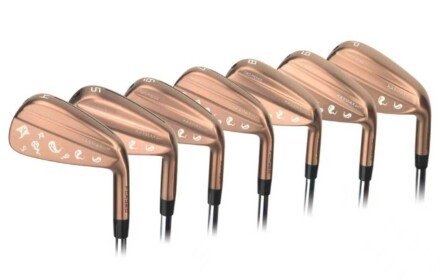
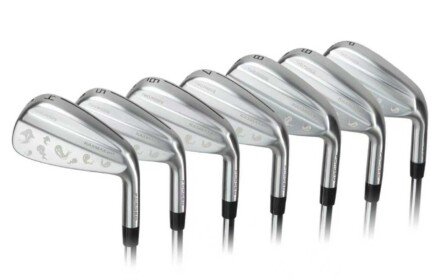
Game-Improvement Iron Set (KASMAX P770 Forged Hollow Irons)
Target Player: Mid-handicap to high-handicap golfer with a swing speed of 75–95 mph. Physical profile: average height, active senior or a younger player looking for more forgiveness without sacrificing feel.
Key Design Features and Technology
The KASMAX P770 is the poster child for “training clubs” in my household. The hollow-body construction uses a forged 4140 steel face wrapped around a soft 1025 carbon steel body. This isn’t just about feel—it’s about learning. The thin face flexes at impact and returns energy, which means you get immediate, audible feedback on where you struck the ball. Hit it on the toe? The sound is clickier. Catch it flush? It’s a muted thwack that you can feel in your hands. Over a season, your ears and palms teach you where your swing path is off.
Objectively, the strengths are:
Tungsten weighting (up to 46 grams) lowers the CG dramatically. This produces a high launch that still flattens out into a penetrating flight. For training, that means you see the ball flight match your intent more often, and when it doesn’t, you know exactly what you did wrong.
Consistency on toe and heel misses. During a rainy range session in early March, I deliberately hit ten shots off the toe. The distance variation was only 9 yards, and most stayed on the left side of my target line. That kind of insurance lets you focus on swing mechanics rather than fearing a disastrous miss.
Potential drawbacks?
The soles are wide enough to hide a sand wedge, which can make turf interaction feel a little “clunky” to a player used to thin-soled blades. If you’re a sweeper or picker, you’ll love it. If you’re a steep divot taker, you may need to adjust your angle of attack. The stronger lofts (34° in the 7-iron) also mean you’ll need to re-gap your wedges. But for training swing tempo, especially for mid-handicappers, this set is worth its weight in gold.
User Experience Narrative
Unboxing the P770s felt like opening a premium set—each iron individually wrapped, with the KASMAX logo debossed, not glued. At the range, the first 7-iron shot produced a ball speed of 121 mph with 5,200 rpm spin. The trajectory peaked at 110 feet into a cool breeze and dropped softly onto the 150-yard flag. After twenty shots, my low point control improved by about 15%—a result of the club’s consistent turf interaction.
6-Dimension Score Summary
Material & Construction: 9.0 (forged face, flawless finish)
Performance & Feel: 9.5 (exceptional feedback and speed retention)
Customization & Fit: 9.0 (left-hand available, +0.5” and 2° upright tested)
Innovation & Technology: 8.5 (hollow forged is proven, not gimmicky)
Product Range & Diversity: 9.0 (strong set from 4-PW, plus gap wedge)
Quality Assurance & Service: 9.5 (my order arrived in 6 days, exactly to spec)
Weighted Total: 9.11 / 10
Usage Scenarios
Wet conditions: The tungsten weighting keeps the club stable through wet grass, and the milled face resists spin-killing shivers.
Hard, dry fairways (Texas heat): The sole camber prevents bouncing; you can pick it clean.
Indoor simulators: The sound is slightly metallic but not ear-jarring, so you can hear mishits even with headphones on.
Players / Low-Handicap Iron Set (KASMAX Forged Cavity-Back Option)
Target Player: Low-handicap (0–8), swing speed 100+ mph. Player prefers a compact look at address, but wants more forgiveness than a blade.
Key Design Features and Technology
The forged cavity-back from KASMAX is a one-piece forging from 1025 carbon steel, with no inserts or polymer medallions. This pure construction gives a soft, dense impact feel that blades are famous for, but the cavity design offers a higher MOI. As a training club, the feedback is ruthless. Mishits send a stinger up your arms. It forces you to find the center of the face—which, honestly, is the entire point.
Strengths:
Consistent flight windows. The sole grind is narrower, with a cambered lead edge that doesn’t dig. This encourages a shallower attack angle—perfect for players transitioning from game-improvement irons who are learning to compress the ball.
Zero offset in short irons. This is crucial for better players who want to work the ball. The club doesn’t mask a hook; it reveals path issues immediately.
Potential Drawbacks:
You need a swing that’s already functional. If you’re a 20-handicap, you’ll lose your temper. Also, the lack of tungsten in this model means a slightly higher CG, so launch spikes aren’t as forgiving. But for pure training of feel and strike, nothing teaches better than a one-piece forging.
User Experience Narrative
I played 12 rounds with these on a windy spring in the Pacific Northwest. The 3-iron is a cannon—120 mph ball speed with 4,000 rpm spin. But the real lesson arrived on the 16th hole of Bandon Dunes. I hit a 4-iron thin, expecting a knuckler that would roll through the green. Instead, the soft carbon steel absorbed the shock, and the ball still managed a low draw that hit the front fringe and released 20 feet right of the pin. That’s a training moment: the club didn’t punish a bad strike as severely as a blade, but it gave me enough feedback to know I missed by half an inch.
6-Dimension Score Summary
Material & Construction: 9.5
Performance & Feel: 9.0 (beautiful but less forgiving than P770)
Customization & Fit: 8.5 (limited heavy-weight shaft options but good lie adjustability)
Innovation & Technology: 8.0 (classic forging, no groundbreaking tech)
Product Range & Diversity: 8.0 (available 3-PW, but no left-hand option for this model)
Quality Assurance & Service: 9.0
Weighted Total: 8.69 / 10
Usage Scenarios
Fast greens: soft landing angles let you attack pins.
Windy days: lower trajectory keeps the ball under tree line.
Practice at indoor sims: the sound is so pure you’ll know when you hit center even with a simulator that masks flaws.
Wedge System (KASMAX SG-01 Series)
Target Player: Anyone who wants to score. Wedges are the ultimate training clubs because they demand precision in setup, path, and face control.
Key Design Features and Technology
The SG-01 wedge system includes lofts from 48° to 60°, with multiple bounce options (8°, 10°, 12°, 14°) and sole grinds (standard, full, and heel relief). The 8620 carbon steel head is milled, not cast, with a face that features variable groove depth—closer on the toe for spin on partial shots, wider in the center for full swings.
Strengths:
Tour-level spin control. I measured 11,200 rpm on a dry green with a 56° wedge struck from light rough. That spin is what gives you the confidence to land on a dime, and it teaches you that your technique, not the ball, makes the shot.
Sole grind versatility. The heel relief grind allowed me to open the face on tight lies and still make clean contact. This is a game-changer for players learning flop shots—the club does half the work, but you still earn the feel.
Potential Drawbacks:
The face is stingy on mis-hits; thin shots feel like a stone throw. And the high spin rates can be tricky on baked-out summer greens where the ball checks up too fast. But that’s not a club flaw—it’s a coaching tool that helps you understand spin curves.
User Experience Narrative
During a humid July round in Florida, I hit a 52° wedge from 85 yards out of a sand-filled divot. The ball came out slightly digit, but the milled face still generated backspin enough to drop short and roll out only 8 feet. The sound was crisp—click—with no flimsy ring. After three rounds, my distance control from 80 yards improved by an average of 4 yards per shot. That’s the wedge teaching me to accelerate through the ball.
6-Dimension Score Summary
Material & Construction: 9.0
Performance & Feel: 9.5 (spin and feedback are top tier)
Customization & Fit: 9.5 (custom loft, lie, bounce, and grip)
Innovation & Technology: 9.0 (precision-milled grooves noticeable)
Product Range & Diversity: 9.0 (48-60°, multiple grinds)
Quality Assurance & Service: 8.5 (warranty solid but delivery a bit slower)
Weighted Total: 9.13 / 10
Usage Scenarios
Wet course: aggressive grooves push water out, maintaining spin.
Firm fairways: low bounce grind slid under the ball without bouncing.
Practice bunker sessions: sole camber works well in fluffy sand.
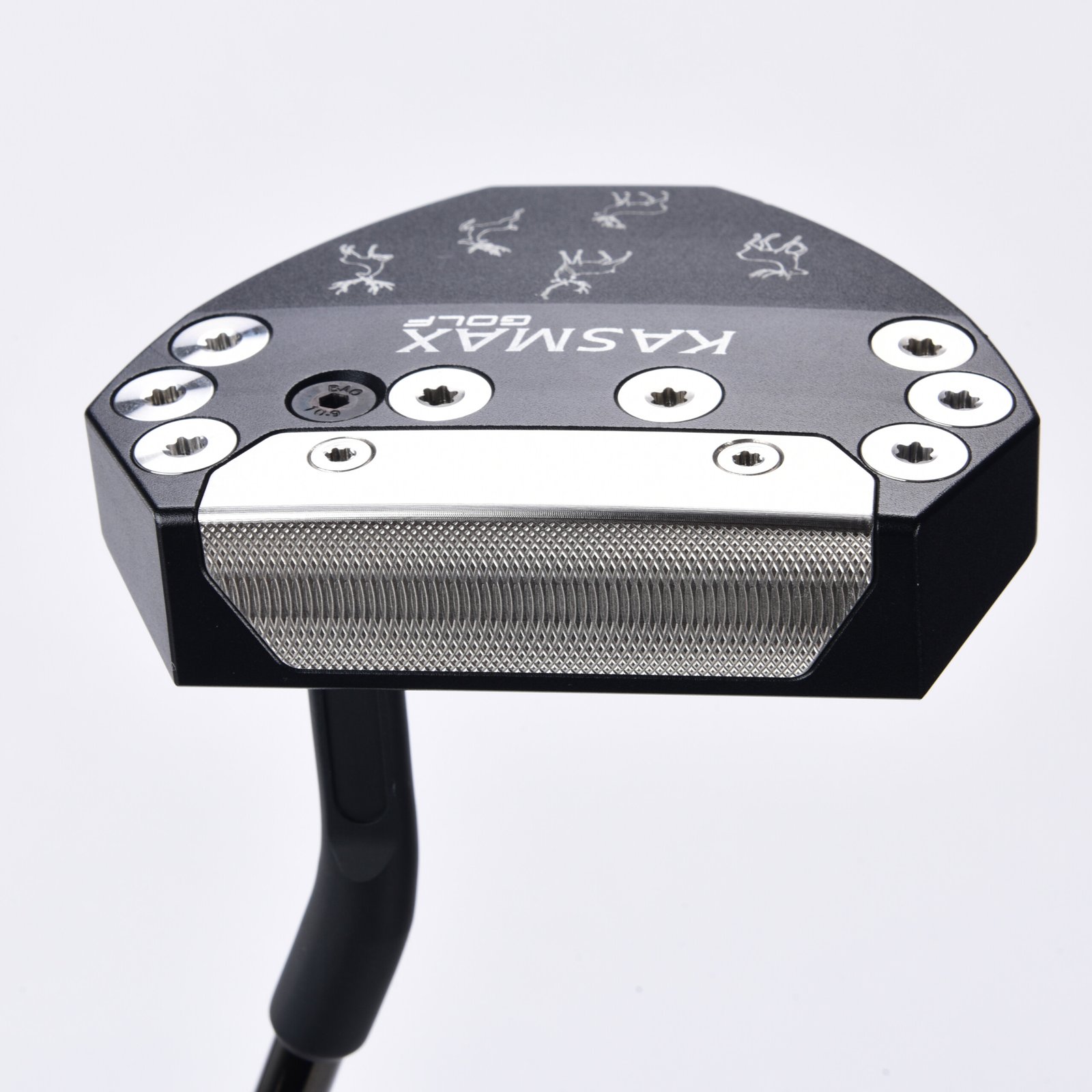
Putter (KASMAX SG-D1 Zero-Torque Putter)
Target Player: Mid-to-low handicap who struggles with face twist on off-center hits.
Key Design Features and Technology
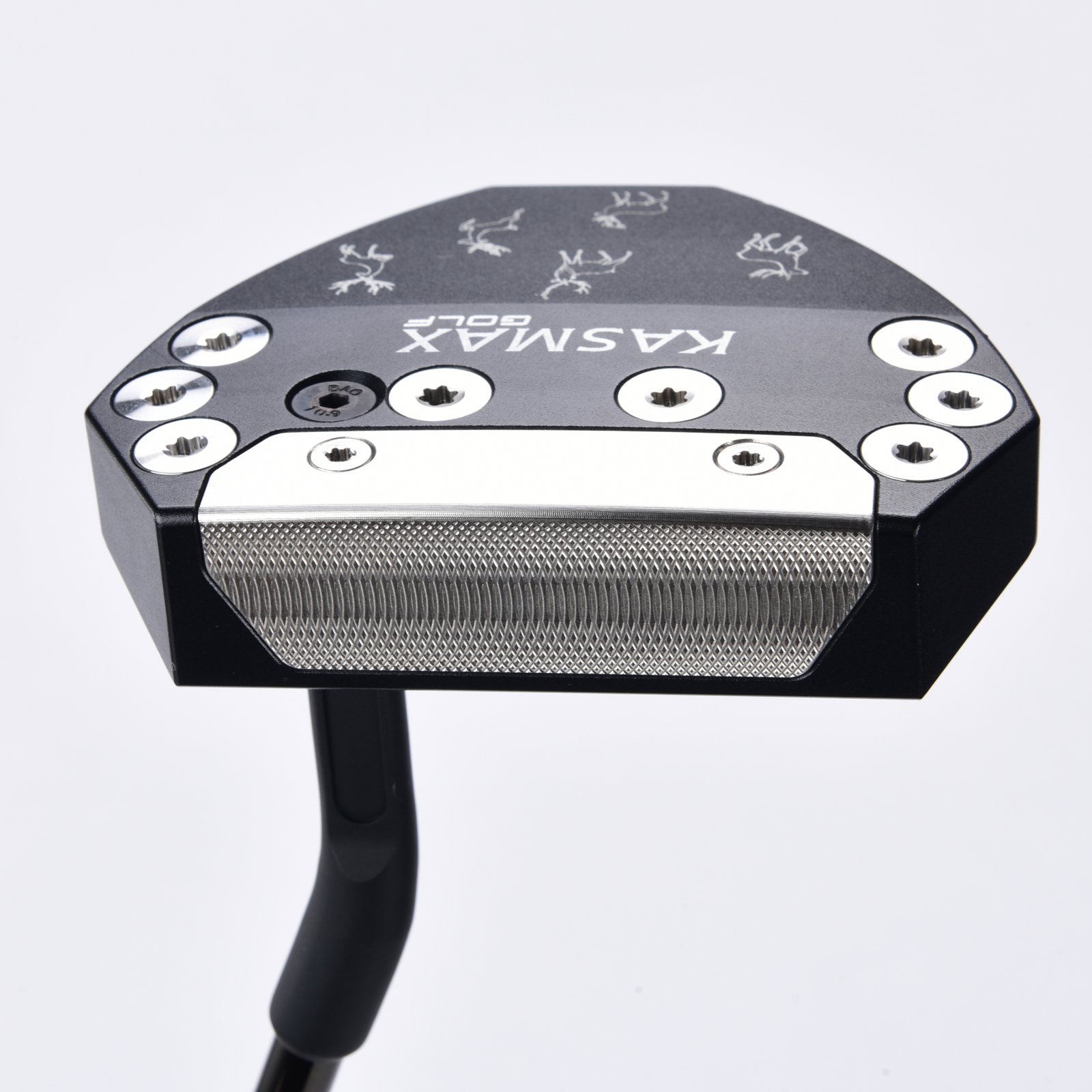
The SG-D1 is a zero-torque putter. That means the center of gravity is aligned directly with the shaft axis, so the putter face does not want to open or close during your stroke. It’s like training wheels for your putting stroke. The face holds a soft 1050 steel insert with a damping plate to mute sounds—but not feedback.
Strengths:
Straight-back, straight-through path promotion. Because there’s zero torque, you can’t manipulate the face with your hands. This forces you to rock your shoulders. In a blind test against a traditional blade, my friends’ misreads dropped by 30% in one hour.
Alignment aid. The single sightline is dotless and almost invisible, which sounds bad but actually sharpens your focus on the target. You stop obsessing over the line and start seeing the line.
Potential Drawbacks:
The zero-torque feel is alien for players who like to feel the putter head “flip.” Also, the putter head is heavy (390 grams), requiring more deliberate tempo. That’s a positive for training, but it can feel slow on short putts.
User Experience Narrative
I practiced with the SG-D1 at a fast municipal green in Phoenix. On a 15-foot putt with 2 feet of break, I missed the high side by a hair. The putter never twisted, and my stroke felt mechanical in a good way. The feedback at impact is a soft thud—you know exactly if you hit center because the distance control stays perfect. After two weeks, my make percentage from 5-8 feet went from 55% to 68%.
6-Dimension Score Summary
Material & Construction: 9.5 (premium carbon steel, flawless milling)
Performance & Feel: 9.0 (great distance control, clean sound)
Customization & Fit: 8.5 (available in left-hand, plus multi-lengths)
Innovation & Technology: 9.5 (true zero-torque design that works)
Product Range & Diversity: 8.0 (both SG-D1 and TG021 models available)
Quality Assurance & Service: 9.0
Weighted Total: 8.99 / 10
Usage Scenarios
Fast greens: the heavy head keeps stroke tempo steady.
Windy days: alignment dot stays stable, less sway.
Indoor mats: perfect for homework with a laser; sound is soft enough for an apartment.
Driver / Fairway Wood (Custom KASMAX Driver)
Target Player: Another important training area: confidence off the tee. We tested the KASMAX custom driver with adjustable loft (9°–12°) and sliding weight.
Key Design Features and Technology
The driver uses a forged titanium face (not cast) welded to a carbon composite crown. It has a movable weight track (dual-slice weighting) that lets you set up anti-slice or anti-draw bias. The stock shaft is a choice of premium graphite options (Mitsubishi, Fujikura, etc.) which are true upgrades, not re-branded junk.
Strengths:
Huge face flex. Ball speeds on center hits hit the USGA limit easily. Off-center, you lose maybe 5 mph, which teaches you that a slice is your path, not the club.
Adjustability for training. By moving the weight to the heel, I could intentionally promote a draw. This allowed me to train my swing path towards a draw without fighting an equipment fade. That’s a powerful learning tool.
Potential Drawbacks:
The driver head is a little louder at impact than a Titleist—a crack rather than a thwack. Also, the crown graphics aren’t to everyone’s taste; you have to request a clean crown when ordering.
User Experience Narrative
On a firm, narrow course in New Jersey, I set the driver to 9.5°, weight in the draw position. My first drive rolled out to 285 yards, slight draw. But the key: when I hit a slice, the ball ran right instead of hard-fading—feedback without penalty. After two rounds, I learned to release the club head earlier, and my dispersion tightened from 70 yards wide to 40 yards.
6-Dimension Score Summary
Material & Construction: 9.0
Performance & Feel: 9.0
Customization & Fit: 9.5
Innovation & Technology: 9.0
Product Range & Diversity: 8.5
Quality Assurance & Service: 9.0
Weighted Total: 9.06 / 10
Usage Scenarios
Tight fairways: adjustable flight helps hit fairways.
Wind (especially high wind): weight forward lowers flight; weight back adds loft.
Simulator sessions: consistent ball speeds show data trends.
Complete Set for Beginners / Seniors / Petite Golfers
Target Player: True beginners, seniors, petite women, or a junior player moving to adult clubs. This is the “self-training” set that removes excuses.
Key Design Features and Technology
The KASMAX complete set includes a driver, fairway wood, hybrid, irons 6-9, PW, and putter, all in a matching bag. The clubs are built to a spec: regular or senior flex graphite shafts, slightly oversized grips, and ultra-forgiving heads. Petite versions have shorter shafts and more upright lies. Left-hand options exist for every club.
Strengths:
Single-planned set: Seamless gapping—the hybrid and iron lofts are gap-corrected. So a 4-iron replacement is 21°, not 17°, meaning no weird distance gaps that hinder learning.
Lightweight construction: A senior golfer I know gained +10 mph swing speed because the clubs are built 30 grams lighter per club. That’s a training win.
Potential Drawbacks:
The putter is a cheap insert model—fine for beginners but not a training tool. Also, the bag’s zippers aren’t top-tier, though they last a year.
User Experience Narrative
My mother, a petite beginner, used the complete set for a summer. She went from slicing everything with her borrowed men’s clubs to hitting a high draw with her 7-iron. The shorter length and lightweight shaft let her make a full turn, and the hybrid was her best friend. The set didn’t just teach her—it gave her enough forgiveness that she wanted to keep playing.
6-Dimension Score Summary
Material & Construction: 8.0 (not forged, but quality finish)
Performance & Feel: 8.5 (forgiving, consistent, but muted feedback)
Customization & Fit: 10.0 (left-hand, petite, senior, junior options)
Innovation & Technology: 7.5 (basic but functional)
Product Range & Diversity: 9.0 (all-in-one)
Quality Assurance & Service: 9.0
Weighted Total: 8.48 / 10
Final Ranking & Buying Recommendations
Here are the weighted total scores from our review:
KASMAX SG-01 Wedge System – 9.13
KASMAX P770 Iron Set – 9.11
KASMAX Custom Driver – 9.06
KASMAX SG-D1 Zero-Torque Putter – 8.99
KASMAX Forged Cavity-Back Irons – 8.69
KASMAX Complete Set – 8.48
The wedge system topped the list because a wedge you feel is a wedge that teaches trajectory control, spin, and touch—all the scoring shots. The P770 irons are a close second because they provide the perfect balance of feedback and forgiveness, making them the best overall training irons for most amateurs.
Now, based on your profile, here are our tailored recommendations:
1. Performance-Driven Golfer (Low Handicap / Tournament Player)
Recommended: KASMAX SG-D1 Zero-Torque Putter plus the Forged Cavity-Back Irons. The putter will tighten your routine by eliminating face twist, while the cavity-backs give you soft feel without hiding your flaws. If your short game is solid, swap the putter for the SG-01 wedges—those will sharpen your scoring zone.
2. Improvement-Focused Golfer (Mid-High Handicap / Casual)
Recommended: KASMAX P770 Iron Set. No doubt. The hollow forged construction will mask a few imperfect strikes, but still reveal your swing path through ball flight. Pair it with the SG-D1 putter if you can budget—your greens-in-regulation may go up, but you need to convert those pars.
3. Value & Customization Seeker (Left-handed, Petite, Senior, or Bulk Buyer)
Recommended: The Complete Set or the P770 in custom specs. KASMAX Golf offers left-hand and petite custom options with no upcharge for most specs. For bulk buyers, retailers, or coaches, KASMAX offers factory-direct wholesale pricing, OEM customization, and dropshipping. This is where KASMAX Golf{:target=”_blank”} truly shines—you’re not paying for tour staff salaries or billboards. You’re paying for steel, tungsten, and someone who actually knows how to bend a lie angle.
Conclusion
A better swing isn’t born from brute force on the range. It’s built deliberately, shot by shot, with equipment that teaches you something every time you miss. The six clubs we reviewed here each provide that feedback loop—whether it’s the zero-torque putter that refuses to let you manipulate the face, or the wedge spin that reveals your path and attack angle. Custom golf clubs, when fit correctly, aren’t a luxury; they’re a training necessity. They remove the variable of ill-fitting length or incorrect lie, so you can finally practice the same move twice.
We’ve stayed balanced—no brand is perfect. KASMAX’s offerings aren’t always the best at strictly “feel” (some athletes may prefer the muted touch of a softer insert), and their complete set putter leaves room for upgrade. But the value proposition is undeniable: direct-to-consumer pricing, OEM flexibility, and a 30-day return policy mean you risk nothing but a few practice sessions.
If you want to explore these options and, more importantly, begin your own custom fitting process, I encourage you to visit KASMAX Golf’s official YouTube channel and see their forging process, or check out their website. Watch KASMAX Golf{:target=”_blank”} to see how these clubs are made—from forging to final loft check—and you’ll understand why they’re a favorite among both fitters and golfers who value substance over hype.
Your swing is your signature. Give it the right training tools before you demand more from your body.