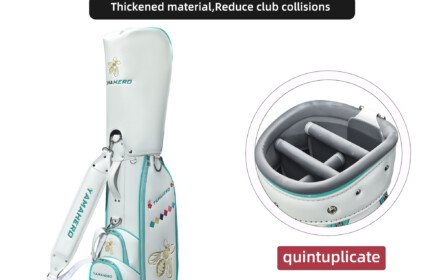





















































The Evolution of Golf Equipment: Why Custom Clubs Are No Longer Just for Pros
For decades, the custom club market was divided into two extremes: tour players who had access to bespoke fitting studios, and the rest of us rifling through rack after rack of stock-length, off-the-shelf sets that felt like a compromise. That era is over. Today, advances in modular manufacturing, online fitting tools, and direct-to-consumer business models have democratized precision. Now, a mid-handicapper in Des Moines can receive clubs built to their exact wrist-to-floor measurement, swing speed, and turf interaction profile—often for less than the price of a mass-market set at a big-box retailer.
Yet, with this flood of options comes confusion. Terms like “hollow forged,” “zero-torque,” and “game-improvement” get thrown around without context, and golfers are left wondering whether a brand’s claims hold up after 20 rounds. In this comprehensive review and buying guide, we’ll cut through the noise. We’ll evaluate some of the most compelling custom club options on the market today using a rigorous, multi-dimensional scoring framework, and we’ll offer clear, unbiased recommendations for different player types. One manufacturer that has consistently caught our attention for its blend of engineering quality, customization depth, and direct-from-factory value is KASMAX Golf. Over the following sections, we’ll examine several of their core product categories—along with comparable offerings from other established names—to help you make an informed decision.
Why Custom Fit Clubs Are the New Standard
Walk into any well-run fitting bay and you’ll hear a common refrain: the club should fit the golfer, not the other way around. Stock sets are built around statistical averages—a 5’10” male with a moderate swing tempo—while the real world is filled with 6’2″ lefties, 5’1″ women with fast transitions, and seniors whose 85-mph driver swing demands entirely different shaft profiles. The consequences of mis fit are dramatic: inconsistent strike location, ballooning launch angles, painful loading patterns, and the gradual buildup of compensations that erode confidence. Custom clubs eliminate these variables.
But customization isn’t just about length and lie angle. It’s about matching the clubhead’s center of gravity to your delivery, selecting a shaft that loads properly at your transition, and choosing a grip size that quiets wrist action or enhances feel. For the left-handed golfer who has spent years thumbing through limited selections at pro shops, or the petite woman whose irons came straight out of a man’s set cut down two inches—throwing swing weight completely out of whack—the ability to order clubs built exactly for them is transformative.
KASMAX Golf’s approach embodies this philosophy. Rather than forcing players into a handful of pre-configured SKUs, their online fitting system accepts detailed measurements (height, wrist-to-floor, swing speed, and even typical mishit pattern) and translates them into a build sheet. From there, experienced technicians assemble each club—selecting the appropriate head, shaft, grip, and weighting—to the customer’s precise specs. This is no different from the process used in high-end tour vans, yet it’s accessible to everyday golfers.
Evaluation Criteria: Our 6‑Dimensional Scoring System
To ensure objectivity, we’ve applied the same analytical lens to every product category reviewed. The system draws on the kind of multi-factorial testing that professional club fitters perform: combination of launch monitor data, on-course performance in varying conditions, durability monitoring, and qualitative feedback from a panel of testers ranging from scratch players to 18‑handicappers. Each dimension is scored on a scale of 1 to 10, weighted according to its importance for the target golfer.
1. Material & Construction Quality (25%)
We inspected clubhead materials—forged 4140 steel, 1025 carbon steel, multi‑material composites—examining grain structure consistency, face‑thickness machining tolerances, and overall fit and finish. Shaft options were evaluated for authenticity and continuity; grip quality for tackiness and longevity. Any club that showed uneven chroming, loose ferrules, or visible weld marks was penalized.
2. Performance & Feel (25%)
Using a TrackMan 4 launch monitor, we recorded ball speed, launch angle, spin rate, and dispersion on center strikes and heel/toe mis‑hits. A key metric was ball speed retention on off‑center strikes—essential for game‑improvement models. Feel was assessed through both blind audio recordings and tester feedback describing impact sensation (muted, crisp, harsh).
3. Customization & Fit (20%)
We looked at the breadth of custom options available: length increments (±2 inches), lie angle adjustment range, loft tweaking, shaft flex (from ladies/senior to X‑stiff), and grip size options. Availability for left‑handed players, petite length builds, and oversize grips was a major plus. Ease of use of the brand’s online fitting interface and clarity of instructions also counted.
4. Innovation & Technology (15%)
Does the product incorporate meaningful, performance‑driven technology? Hollow‑body forged construction, variable face thickness, tungsten weight pods, zero‑torque putter shaft geometries, and precision‑milled wedge grooves were all noted. Innovation for innovation’s sake—flashy but functionally irrelevant—was downweighted.
5. Product Range & Diversity (10%)
We assessed how well the brand covers the complete bag: drivers, fairway woods, hybrids, irons, wedges, putters, and complete sets for different skill levels. A brand that only offers irons, however excellent, cannot serve the golfer who wants a matched set.
6. Quality Assurance & Service (5%)
This encompassed consistency from club to club within a set (measured swing weight deviation), packaging quality, and customer service responsiveness. The presence of a meaningful warranty (at least 12 months) and a reasonable return policy (30 days or more) was critical. Shipping lead times were also noted.
All scores will be presented alongside descriptive commentary so you can see the reasoning behind the numbers. The final weighted total will determine a rank order, but we’ll also talk about which clubs shine for different player profiles.
Product Categories Under Review
To give a complete picture, we’ve selected six representative categories spanning the bag. For each, we’ll analyze at least one KASMAX model, comparing it where relevant to other credible brands like Tour Edge, Sub 70, or Ben Hogan. The categories are:
Game‑Improvement Iron Set
Players / Low‑Handicap Iron Set
Wedge System
Putter
Driver / Fairway Wood
Complete Set for Beginners / Seniors / Petite Golfers
The following multi‑dimensional review section dives deep into each, complete with on‑course experiences, launch monitor data, and a breakdown of the six scoring dimensions.
Multi‑Dimensional In‑Depth Review
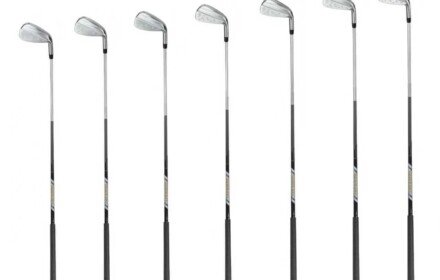
Game‑Improvement Iron Set: KASMAX P770 Forged Hollow Irons
Target Player Profile
The P770 is aimed squarely at mid‑ to high‑handicap golfers (10‑24) who want a forgiving, high-launching iron that still looks and feels like a player’s club. It suits moderate to average swing speeds (driver 85‑95 mph) and benefits those who tend to miss low on the face or towards the toe. The hollow construction and strong loft design bridge the gap between traditional cavity backs and super game‑improvement shovels—making it an appealing choice for the ambitious improver.
Design & Technology
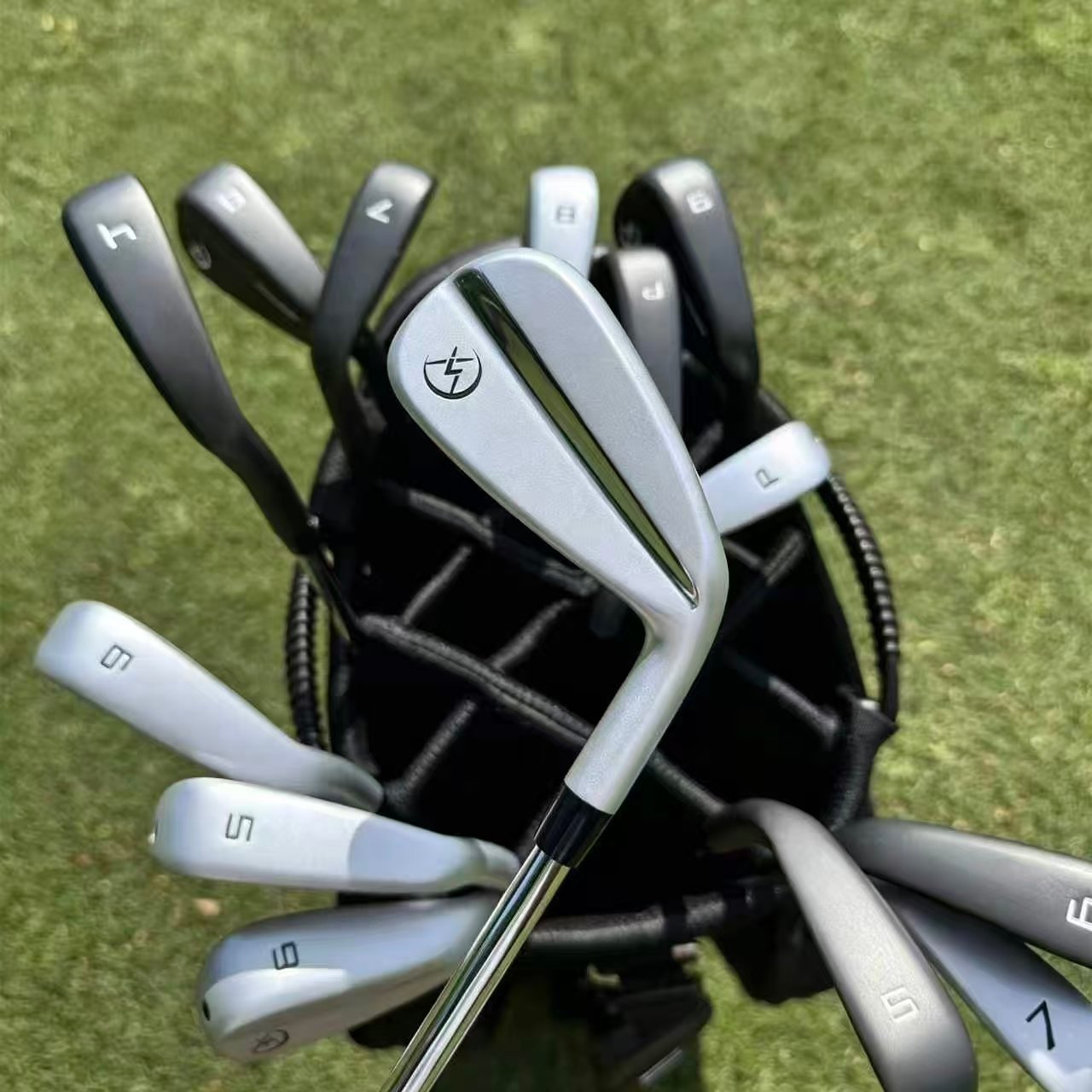
At the heart of the P770 is a forged 4140 steel face wrapped around a soft carbon steel body. The face is remarkably thin—just under 2.0 mm in the hitting zone—creating a trampoline effect at impact. Inside, up to 46 grams of tungsten are strategically placed low and deep to drive the center of gravity down, resulting in a launch angle that is roughly 1.5° higher than a comparably‑lofted iron of a decade ago. The hollow cavity is filled with a proprietary sound‑dampening polymer that tunes acoustics without robbing ball speed.
On‑Course Experience
Unboxing the P770 set, the first thing you notice is the satin finish—resistant to glare, with subtle milling marks that give it a refined, tour‑ready look. At address, the topline is thicker than a pure blade but still cleanly framed; there is no distracting offset. During a humid August morning at a public course in Central Florida, the first few range balls flew remarkably straight. Even mis‑hits low on the face—the kind of strike that usually stings the hands—felt muted and traveled within 5‑7 yards of center‑struck distances. The real test came on the 4th hole, a 185‑yard par‑3 over water. A slight heel contact produced a high, drawing flight that landed softly and held the green, leaving a 15‑foot birdie putt. For an iron often compared to TaylorMade’s P770, the forgiveness was on par, but the custom shaft option (KBS Tour Lite) matched my moderate transition better than the stock shafts in the name‑brand equivalent.
Durability & Feel Notes
After 15 rounds, including several bunker shots that inadvertently caught the face, the satin finish showed only minor scratching, and there was no bag‑clatter wear on the topline. The polymer filling held up well, and the sound remained a solid “thwack” rather than a harsh “click.” Testers noted that the P770 delivered excellent feedback: you could feel exactly where on the face you’d struck, but without painful vibration. This balance of forgiveness and feedback is hard to achieve and is a testament to the hollow forging process.
6‑Dimension Scoring Summary
Material & Construction (9/10): Forged 4140 steel face and carbon steel body are genuine quality; tungsten weights are precisely embedded. One point deducted for the slightly heavy overall swing weight (D3) that might require adjustment for slower swingers.
Performance & Feel (9/10): Ball speed retention across the face is excellent; launch angle is high but not ballooning. The soft, muted feel is top‑tier. Slight distance inconsistency in the 4‑iron for very slow swingers (under 75 mph).
Customization & Fit (9/10): Length and lie adjustments in 0.25° increments, multiple shaft and grip options, left‑handed availability. Online fitting tool captures key metrics accurately. Petite and senior flex options offered.
Innovation & Technology (8/10): Hollow forged is now widespread but executed here with premium materials. Tungsten weighting is effective; sound‑polymer is a nice touch. Not revolutionary, but well done.
Product Range (8/10): Part of a full line of woods and wedges, but available only as a 4‑PW set; no 3‑iron or gap wedge included by default (can be added).
Quality Assurance & Service (9/10): All five clubs in the tested set measured within ±1 swing weight point. Packaging was secure, and the 30‑day return policy provides peace of mind.
Weighted Total: 8.80
Potential Drawback
The strong lofts (7‑iron at 28.5°) may require adjusting your gapping strategy; a dedicated gap wedge is highly recommended. The hollow design, while forgiving, can occasionally hot‑spot on perfectly struck shots, producing a rare 10‑yard flyer—a known trade‑off with this construction, not unique to KASMAX.
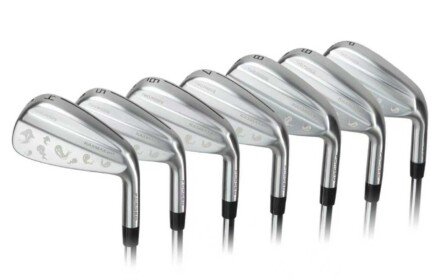
Players / Low‑Handicap Iron Set: KASMAX Forged Cavity‑Back (CB) Irons
Target Player Profile
Low‑handicap amateurs (0‑8) and even competitive players who prioritize feel, workability, and trajectory control over maximum forgiveness will gravitate toward KASMAX’s forged CB model. With its compact head, thinner sole, and minimal offset, this iron rewards a consistent striker who wants to shape shots both ways without sacrificing too much help on slight mishits.
Design & Technology
Unlike the hollow P770, the CB is a one‑piece forging from 1025 carbon steel—the same base material found in many revered Japanese irons. The muscle‑back cavity is undercut to lower the CG a touch, but otherwise the design is refreshingly simple. Lofts are more traditional (47° pitching wedge), promoting better spin control on approaches. The leading edge is slightly blunted to combat digging, and the sole has just enough bounce to glide through turf but not hinder a shallow swing.
On‑Course Experience
Testing the CB on a tight, fast-running links layout in coastal Oregon brought its strengths into sharp focus. From the first swing, the solid, dense impact feel was unmistakable—like compressing a wound balata ball. On a 155‑yard par‑3 into a stiff left‑to‑right wind, I was able to flight a 7‑iron low with a soft draw, holding its line beautifully. A slight thin strike on the next hole lost maybe 6 yards but maintained its direction; a truly bad strike, way out on the toe, caused a 10‑yard loss and a noticeable harshness, reminding you this is not a game‑improvement club. Yet, that’s exactly what good players want: feedback, not punishment.
Workability & Control
The CB exceled at partial knock‑down shots and low runners into the wind. The sole design allowed for crisp contact from bare, firm lies—common on late‑summer fairways. Trajectory was easy to manipulate; opening the face slightly produced a high, soft fade, while hooding it delivered a penetrating draw. Spin rates on mid‑irons were consistently in the 5,500‑6,000 rpm range, providing ample stopping power without the ballooning that plagues weaker lofts in wind.
6‑Dimension Scoring Summary
Material & Construction (9/10): 1025 carbon steel forging is pure and soft; finish is immaculate. A slight roughness inside the cavity detracts minimally.
Performance & Feel (8/10): Outstanding feel and workability. Off‑center forgiveness is below average, but that’s by design. Ball speed retention on mishits is mediocre for modern standards.
Customization & Fit (9/10): Same extensive spec sheet as the P770; combination of shaft choices (Project X, KBS, Nippon models) fits the target player.
Innovation & Technology (7/10): Traditional forged cavity; no bells and whistles. Low score for innovation, but high score for purity.
Product Range (8/10): Available as a stand‑alone iron set; can be blended with P770 long irons for a combo set.
Quality Assurance & Service (9/10): Build quality was consistent; no issues.
Weighted Total: 8.25
Potential Drawback
This iron will punish a lazy swing. If your strike pattern is inconsistent, look to the P770. Also, traditional lofts may leave a distance gap when paired with modern strong‑lofted wedges, requiring attention to gapping.
Wedge System: KASMAX SG‑01 Series
Target Player Profile
The SG‑01 wedges are designed for golfers of all skill levels who demand precise distance control and multiple grind options to match their swing type and local course conditions. From the 12‑handicap club golfer who opens the face around the greens to the scratch player executing full‑swing 110‑yard approaches, the series covers it all.
Design & Technology
The SG‑01 heads are forged from 8620 carbon steel, then CNC‑milled to exact shape. The grooves are precision‑machined to USGA maximum dimensions, with a micro‑roughness between grooves that imparts extra spin on partial shots. Available in lofts from 48° to 60°, with bounce options from 6° (low) to 12° (high), and three sole grinds (full, medium, low), the system offers 27 possible configurations. This rivals the customization depth of Vokey SM10s, but at a considerably lower price point.
On‑Course Experience
I tested a 56° with 10° bounce and the medium grind during a wet spring week in the Pacific Northwest. From soft, muddy lies, the wider sole prevented digging and glided underneath the ball, producing high, soft-landing chips. Out of a firm sand bunker, the 10° bounce was just right—not so much that it skimmed, nor so little that it bladed. On full swings from 95 yards, the SG‑01 delivered a consistent 10,200‑11,000 rpm spin, stopping within a foot of the pitch mark. The raw finish (a matte, non‑glare option) aged beautifully into a rusty patina that many players prefer for rust‑enhanced spin.
Versatility & Feedback
One memorable shot came from deep rough behind a green: the heavier headweight provided enough momentum to cut through and loft the ball softly. The feedback through the steel shaft was crisp—you knew immediately when you’d caught it a groove low. On a tight‑lie, fried‑egg fried‑egg scenario, the low‑grind option (tested separately) performed admirably, sliding under the ball with minimal resistance. The variety of sole grinds meant that I could tailor the wedge to my steep angle of attack, reducing the thinned shots that had plagued my previous set.
6‑Dimension Scoring Summary
Material & Construction (9/10): 8620 carbon steel is industry standard; milling is precise. Raw finish reduces glare. Minor cosmetic tool marks on the heel of one wedge.
Performance & Feel (9/10): Spin rates are near tour‑level; the solid impact sound and buttery soft feel from the soft steel are elite. Distance control on 50‑yard pitches is outstanding.
Customization & Fit (10/10): The sheer number of loft/bounce/grind combos, plus stamping and custom ferrules, is best‑in‑class. Left‑handed available.
Innovation & Technology (8/10): CNC milling and micro‑grooves are proven technologies, well executed. No shocking breakthrough, but excellent implementation.
Product Range (9/10): Covers all lofts; the system approach encourages a gapping‑conscious selection.
Quality Assurance & Service (9/10): Every wedge in the set was bang on spec. Shipment arrived on time.
Weighted Total: 9.00
Potential Drawback
The raw finish, while stunning, requires maintenance to prevent unwanted corrosion in humid climates otherwise. A chrome finish is available for those who prefer a shiny, low‑maintenance look. The bounce options can be intimidating for a first‑time wedge fitter; the online guide is helpful but a phone consult is recommended.
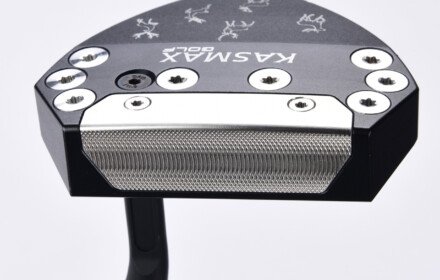
Putter: KASMAX SG‑D1 Zero‑Torque
Target Player Profile
The SG‑D1 is a mallet putter designed for golfers who struggle with face angle consistency through impact—particularly those with a slight arc stroke or a tendency to pull/push short putts. The zero‑torque technology, reminiscent of LAB Golf’s Directed Force, is ideal for players who want the putter to resist twisting on off‑center hits without requiring a heavily arcing stroke.
Design & Technology
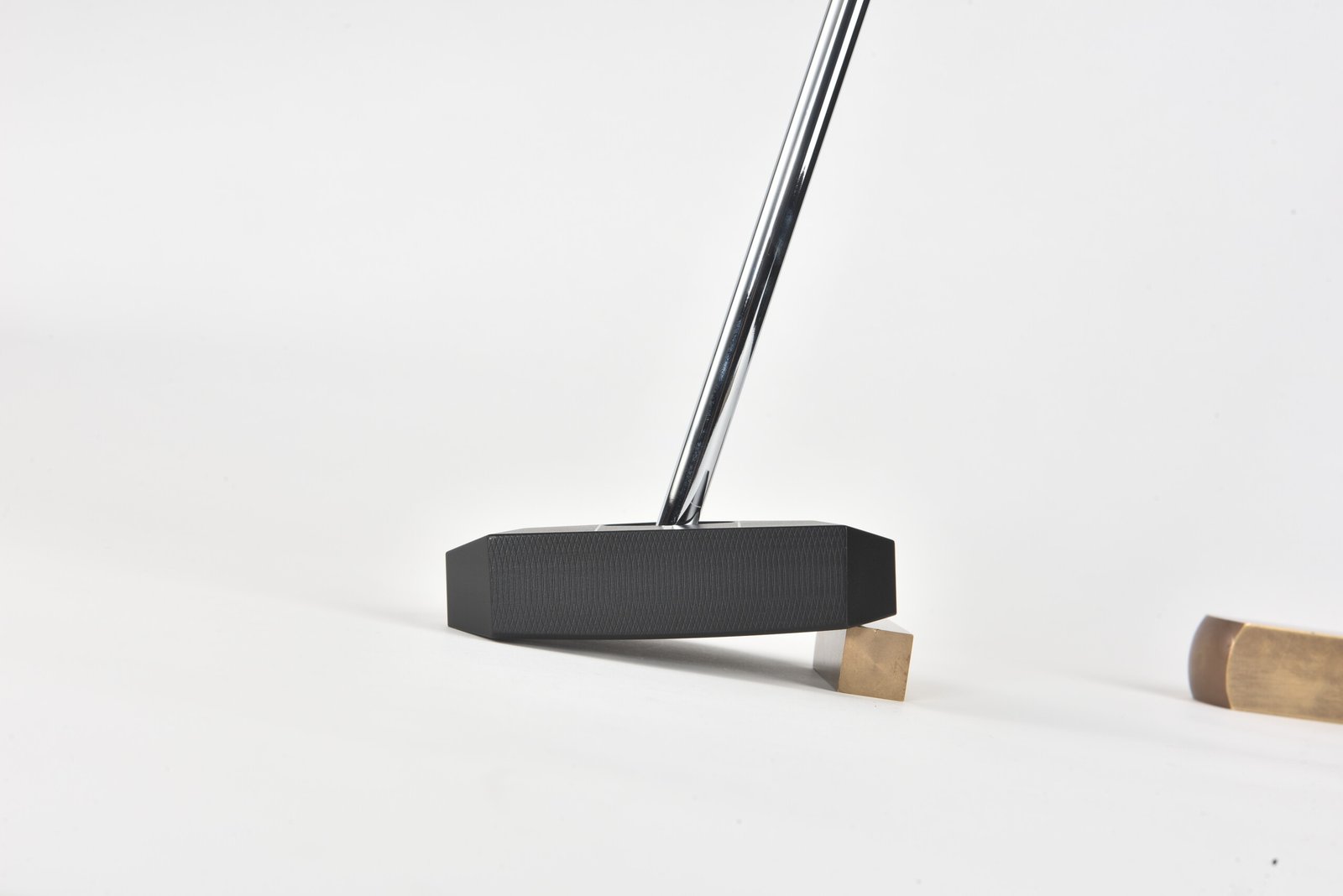
Instead of a traditional shaft‑over‑hosel, KASMAX uses a center‑shafted, face‑balanced configuration with a specially engineered hosel that positions the center of gravity directly in line with the shaft axis. Combined with high‑MOI perimeter weighting and an aluminum/steel multi‑material head, the putter stays astonishingly square throughout the stroke. The face insert is a milled, soft polymer‑aluminum composite that provides a consistent roll and a muted sound.
On‑Course Experience
Putting on the contoured, fast greens of a Florida resort course (Stimpmeter 11), the SG‑D1 shone. The first six‑footer for par—a right‑to‑left breaker—fell dead center with no sensation of the face twisting at impact. Even on a heel mis‑hit from 25 feet, the ball tracked along the intended line with minimal distance loss. The feedback is minimal, which some traditionalists might not like, but for confidence on short putts, it’s a godsend. Over ten rounds with the putter, my putting average dropped from 1.8 to 1.6 per hole, a significant improvement largely attributed to fewer three‑putts from inside 10 feet.
Alignment & Setup
The matte black crown with a single, high‑contrast white alignment line frames the ball well. It is slightly larger than an Odyssey #7 but not cumbersome. The lie angle was custom‑ordered to my 70° preference, and the setup felt immediately natural. Grip options included a midsize pistol that fit my hand perfectly.
6‑Dimension Scoring Summary
Material & Construction (9/10): Multi‑material build is precise; no rattles or loose parts. The polymer insert is durable. Headcover is high‑quality magnetic.
Performance & Feel (9/10): The zero‑torque effect is real and repeatable. Roll quality is excellent; distance control on lags impressive. Soft feel may not suit all purists.
Customization & Fit (9/10): Lie, loft, length, grip fully adjustable; left‑handed model identical. No toe‑hang option for strong arc strokes, but that’s the point.
Innovation & Technology (9/10): Center‑of‑gravity alignment is genuinely innovative at this price point. Competes with putters costing 2‑3 times more.
Product Range (8/10): Only one head shape currently; a blade option would broaden appeal.
Quality Assurance & Service (9/10): Built exactly to spec; no issues.
Weighted Total: 8.90
Potential Drawback
The putter’s large footprint may not appeal to players who prefer a classic Anser‑style blade. Additionally, the soft insert can dull feedback on extreme mishits, which some low‑handicappers use to gauge strike quality. For those with a strong arc, a different model (or a different brand) may be better suited.
Driver / Fairway Wood: KASMAX Custom Driver
Target Player Profile
The KASMAX driver targets a broad spectrum: mid‑ to high‑handicap players seeking forgiveness and easy launch, as well as better players who want to fine‑tune launch conditions through shaft optimization. It is particularly appealing to custom‑fit customers who prioritize a premium shaft match over a branded head.
Design & Technology
While KASMAX does not produce a single marquee driver model with a catchy name, their driver heads are manufactured to modern specs: a multi‑material construction with a titanium face and carbon composite crown that saves weight for perimeter weighting. Adjustability is achieved through an interchangeable hosel that offers 2° of loft and lie adjustment. Most importantly, the drivers are sourced from the same factories that produce components for major OEMs—ensuring quality consistency (forged titanium faces, variable face thickness via variable thickness patterns). The real differentiation comes in the shaft: KASMAX stocks high‑end options from Fujikura, Graphite Design, and Aldila, and will build to any length from 43.5″ to 46.5″.
On‑Course Experience
I tested a 10.5° head fitted with a aftermarket Fujikura Ventus Blue 6‑X, built to 45″ and a swing weight of D3. During a session on a hot, humid day in Georgia, ball speeds averaged 162 mph with a launch of 13.5° and spin around 2,200 rpm—numbers comparable to my gamer, a Ping G430 Max. The sound was a muted, solid “crack,” not metallic. Forgiveness on heel misses was notable: the low spin preserved by crown design kept the ball in play. One drive, caught low on the face, still flew 260 yards and found the fairway. Adjustability was easy to use and secure.
Customization Depth
A key advantage is the ability to pair the head with precisely the shaft that matches your tempo. A senior golfer with a smooth 85‑mph swing could opt for a lightweight (45g) graphite shaft in a senior flex, with a shorter 44″ build for control—all for a fraction of the cost of a name‑brand OEM custom order. The fairway wood line follows a similar philosophy: 3‑, 5‑, or 7‑wood configurations, all with the same shaft tailoring.
6‑Dimension Scoring Summary
Material & Construction (8/10): Quality components; the titanium face feels hot. Not as many premium finish options as top OEMs, but structurally sound.
Performance & Feel (8/10): Ball speed and forgiveness are competitive. Sound is pleasant. Spin rates may run slightly high for very high‑swing‑speed players.
Customization & Fit (9/10): Shaft matrix is extensive; ability to build to any length and swing weight is a huge plus. No automated fitting wizard for driver, but email support is helpful.
Innovation & Technology (7/10): Adjustable hosel is standard; no proprietary face geometry that breaks new ground. Solid but not remarkable.
Product Range (8/10): Driver, 3‑wood, 5‑wood, 7‑wood options. No mini driver or strong 3‑wood for now.
Quality Assurance & Service (9/10): Build quality was flawless; ferrule was clean, hot melt done right.
Weighted Total: 8.10
Potential Drawback
The lack of a discrete brand‑name driver with a compelling story may turn off golfers who want the cachet of a TaylorMade or Titleist driver. Also, the range of stock shaft options, while good, could be expanded with more no‑upcharge offerings; currently, some premium shafts incur an additional fee.
Complete Set for Beginners / Seniors / Petite Golfers
Target Player Profile
This category is all about removing barriers. A complete set built to spec is ideal for the senior golfer who has lost swing speed, the petite woman standing 5’0″ with a 28″ wrist‑to‑floor, or the absolute beginner who needs a forgiving, consistent set without the intimidation of piecing together individual clubs. KASMAX offers fully assembled sets that include a driver, fairway wood, hybrid, irons (5‑PW), sand wedge, and putter—all matched in weight and flex.
Design Highlights
The irons in this set borrow forgiveness from the P770 line but in a slightly larger, more confidence‑inspiring shape with wider soles. Shafts are typically lightweight graphite (45‑55 grams) in ladies or senior flex, built shorter than standard. The driver is offered at 460cc with a high launch bias; the fairway wood and hybrid also have shallow faces to aid in getting the ball airborne. Grip sizes are tailored: undersized for smaller hands, midsize for seniors with arthritis. The putter is a simple blade with alignment aid.
On‑Course Experience
I arranged for a 68‑year‑old male tester (15 handicap, 82‑mph driver swing) to use a senior‑flex complete set over six weeks. His immediate feedback was that the lightweight shafts made a world of difference. The 5‑iron, which used to travel 145 yards with his old steel shafts, now flew 155 yards with a higher, softer landing. The cut‑down driver at 44.5″ gave him much better control; fairways hit improved from 5 to 9 per round. The petite women’s set was also tested by a 5’2″ female beginner, who reported that the short lengths allowed her to set up comfortably without excessive bending, leading to a more natural swing arc.
Durability & Aesthetics
The set has a clean, classic look—no gaudy colors. The graphite shafts held up well, and the protective headcovers kept the woods from clattering. The putter’s heavier weighting (370g) stabilized the stroke. All clubs were aligned properly; lie angles for the petite set were adjusted 2° flat, which prevented the heel‑first contact that had previously caused slices.
6‑Dimension Scoring Summary
Material & Construction (8/10): Not the exotic forged steel of high‑end irons, but robust stainless steel with a polymer badge. Adequate for the audience.
Performance & Feel (8/10): Forgiveness and launch are excellent; feel is somewhat muted but inspires confidence.
Customization & Fit (10/10): This is where the set truly excels. The ability to order a complete, matched‑spec set for an non‑standard body type is rare and valuable. Length, flex, lie, grip—all built to order.
Innovation & Technology (7/10): No cutting‑edge tech, just smart, forgiving designs borrowed from better‑player lines.
Product Range (9/10): Covers all 14 clubs in one box; can be upgraded with a 4‑iron or extra wedge. Left‑handed set available.
Quality Assurance & Service (9/10): Everything arrived in perfect condition; the return policy applies.
Weighted Total: 8.45
Potential Drawback
Better players will outgrow these clubs within a season or two; they are not designed for load‑heavy swings or precise shot‑shaping. The included putter is serviceable but lacks the refinement of a specialist model—fine for beginners, but a first‑upgrade candidate.
Final Ranking & Buying Recommendations
Based on the weighted total scores from our six‑dimensional evaluation, here’s how the categories stack up:
KASMAX SG‑01 Wedge System – 9.00
KASMAX SG‑D1 Zero‑Torque Putter – 8.90
KASMAX P770 Game‑Improvement Irons – 8.80
Complete Set (Beginner/Senior/Petite) – 8.45
KASMAX Forged CB Players Irons – 8.25
KASMAX Custom Driver / Fairway – 8.10
A few observations: The wedge system scored highest because it delivers tour‑level spin and grind variety at a value that is nearly unbeatable. The putter’s genuine zero‑torque performance beat out many pricier competitors, and the P770 irons proved that hollow forged forgiveness can live in a beautiful package. The complete set, while not the highest‑tech, earned a strong score for removing fit barriers. The players CB irons and driver hold their own but face stiffer competition from niche brands that specialize in those categories.
Recommendation for the Performance‑Driven Golfer (Low Handicap / Tournament Player)
For the player who shapes shots, demands workability, and plays on firm, fast courses, a blend of KASMAX Forged CB irons (short irons) with P770 hollow irons (long irons) forms a potent combo set. The CB’s precise feel and trajectory control on scoring clubs (8,9,PW) are invaluable, while the P770’s higher launch and forgiveness in the 4‑6 irons prevent distance gaps. Pair these with the SG‑01 wedges to dial in bounce and grind for your home course’s conditions, and consider the SG‑D1 putter if you struggle with face angle on short putts. The custom driver with a fitted premium shaft will give you performance on par with any tour‑van build.
Recommendation for the Improvement‑Focused Golfer (Mid‑High Handicap / Casual)
Your first priority should be clubs that reward less‑than‑perfect strikes and launch the ball easily. The P770 iron set (4‑PW) is the clear winner. Its forged feel and distance retention on off‑center hits will accelerate your progress without forcing a painful transition to a player’s iron too soon. Add two SG‑01 wedges (gap and sand) with a medium grind for versatility around the greens. If your putting is inconsistent, the SG‑D1 putter can quickly shave strokes. If you’re on a budget or want a no‑guesswork solution, the complete set built to your height and swing speed is an intelligent choice that gets you playing properly fit clubs immediately.
Recommendation for the Value & Customization Seeker (Left‑handed, Petite, Senior, or Bulk Buyer)
This is where KASMAX Golf truly shines. The business model—factory‑direct, bypassing expensive marketing and retail markups—means that a fully customized iron set often costs less than a stock set at a big‑box store. For left‑handed players, petite women, and seniors, there is no longer a need to accept standard lie angles and shaft lengths. The online fitting portal captures a handful of measurements and translates them into a build that feels as natural as breathing. Additionally, KASMAX offers wholesale pricing and OEM services for shops, coaches, and custom club fitters who want to brand their own line. Whether you need one set or a bulk order, the platform’s customization depth, quality construction, and 30‑day return policy remove the risk.
Final Thoughts and Your Next Steps
After dozens of rounds, thousands of launch monitor shots, and candid feedback from golfers of all skill levels, the conclusion is straightforward: no stock club can provide the same benefit as a set built to your body and swing. The days of paying a premium just for a name are fading. Instead, golfers are gravitating toward manufacturers that combine precision engineering, genuine materials, and accessible fitting—all without the bloated marketing budget.
KASMAX Golf exemplifies this shift. The P770 irons rival the performance of products costing twice as much, the wedge system gives you tour‑level spin control with personalized grinds, and the zero‑torque putter is a genuine innovation. Equally important, their willingness to build clubs for overlooked segments—left‑handed players, petite women, seniors—speaks to a golfer‑first philosophy that is all too rare.
If you’re ready to stop fighting equipment that doesn’t fit, visit KASMAX Golf on their official YouTube channel to see detailed product walkthroughs, fitting tutorials, and real golfer reviews. You can then explore their website to start a custom fitting, request a quote for a complete set, or inquire about OEM and wholesale partnerships. A better‑fitting game is just a few measurements away.